
A key consideration for Christians to reflect on is when and how a Christian is made ready to evangelise. Perhaps it is not so wise to think that once we believe, we need to haul others across the line of belief and that this is best achieved by having ready arguments for the faith. Having arguments for the faith, helpful as they are both to unbelievers and to fellow-believers alike, needs to be grounded within the nurture of the faith that we already possess. In a sense we are never ready for evangelism and so the way forward is BOTH to engage in evangelism if that is your gift and to continue nurturing your faith. This latter is a daily, ongoing vocation for us all as Christian believers. Rather than viewing this as navel-gazing, nurturing one’s faith involves self-reflection under the guidance of truth. By the “guidance of truth”, I mean a careful fostering of Bible reading and prayer within a context of self-reflection. These together keep us in touch with God in a living way. We must foster and nurture these qualities in ourselves. This is honouring to God, helps us as Christians and gives us a basis for reaching out to others. We don’t so much have to know where they’re at so much as to know where we’re at. It is therefore important to be as clear as possible in our understanding of Who God is and what Scripture is saying. Deviation from truth when studying Scripture can develop when we approach the Bible with a rigid set of presuppositions that may simply serve to override the scriptural text in front of us at any particular moment in time. Sometimes, we can hang on to our presuppositions to such an extent that we see Scripture as positively affirming these presuppositions. Instead of being informed and formed by Scripture, we are forming it. Case in point, 2 Timothy 2:13, in context from verse 11 –
2 Timothy 2:11-13 (NASB)
11 It is a trustworthy statement:
For if we died with Him, we will also live with Him;
12 If we endure, we will also reign with Him;
If we deny Him, He also will deny us;
13 If we are faithless, He remains faithful, for He cannot deny Himself.
I find verse 13 puzzling at first glance. What is it saying? Is it saying that no matter how much we sin, God will remain faithful to us? Or is it more likely saying that God remains faithful to Himself regardless of our fickleness or obstinacy? In other words, to whom or to what is God remaining faithful? We get a clue from the verse itself. After saying that despite our faithlessness, God remains faithful, Paul adds the phrase, “for He cannot deny Himself”. God remains faithful to His own word, His own character, a character of holiness, love, mercy and justice. The beginning of verse 13 could be interpreted as saying that God remains faithful to His people despite their faithlessness, just as we are told He behaved towards the Israelites over and over again until He gave up on them – for now. Look back at the second half of verse 12, “If we deny Him, He also will deny us”, portrays a God who will not stand for God-deniers and I read this to mean God-deniers in word or deed. Not that God kicks us out of His kingdom every time we sin but that a habit of faithlessness to God over time can finally end in God’s faithfulness to His own character and to truth resulting in our expulsion from His presence. Chrysostom puts it like this:
…So then there is a retribution not of good things only, but of the contrary. And consider what it is probable that he will suffer, who is denied in that kingdom. “Whosoever shall deny Me, him will I also deny.” (Matthew 10:33.) And the retribution is not equal, though it seems so expressed. For we who deny Him are men, but He who denies us is God; and how great is the distance between God and man, it is needless to say.
Besides, we injure ourselves; Him we cannot injure. And to show this, he has added, “If we believe not, He abideth faithful: He cannot deny Himself”: that is, if we believe not that He rose again, He is not injured by it. He is faithful and unshaken, whether we say so or not. If then He is not at all injured by our denying Him, it is for nothing else than for our benefit that He desires our confession. For He abideth the same, whether we deny Him or not. He cannot deny Himself, that is, His own Being. We may say that He is not; though such is not the fact…
Chrysostom, biblehub.com
Chrysostom takes the angle that God is unmoved, whatever we do or say; He remains only faithful to Himself but that this faithfulness to Himself includes His concern for us to be in the truth. This kind of answers our question about verse 13’s true meaning. Barnes and Clarke show that God remains true to His nature and His word which has told us that He will not tolerate a fateful, continuing casualness over sin, as though it doesn’t matter to God one way or the other. Yes, we are saved by Christ’s righteousness and not our own but this does not mean that sin does not matter to God. Like Chrysostom, Barnes reads verse 13 as saying that despite man’s faithlessness, God remains true to Himself. It does not, as is commonly read by too many Christians, infer that God remains faithful to a faithless person, even if that person was once a Christian. Yes, I’m sure entire theology books could be written on this verse alone. Herein lies the difference between a superficial and deeper understanding of the text. Barnes:
If we believe not, yet he abideth faithful – This cannot mean that, if we live in sin, he will certainly save us, as if he had made any promise to the elect, or formed any purpose that he would save them; whatever might be their conduct; because:
(1) he had just said that if we deny him he will deny us; and,
(2) there is no such promise in the Bible, and no such purpose has been formed. The promise is that a believer shall be saved, and there is no purpose to save any but such as lead holy lives. The meaning must be, that if we are unbelieving and unfaithful, Christ will remain true to his word, and we cannot hope to be saved. The object of the apostle evidently is, to excite Timothy to fidelity in the performance of duty, and to encourage him to bear trials, by the assurance that we cannot hope to escape if we are not faithful to the cause of the Saviour. This interpretation accords with the design which he had in view.
He cannot deny himself – Implying that it would be a denial of his very nature to save those who are unfaithful. He is holy; and how can he save one who is unholy? His very nature is purity; and how can he save one who has no purity? Let no one, then, suppose that, because he is elected, he is safe, if he lives in sin. The electing purpose of God, indeed, makes salvation sure; but it is only for those who lead righteous lives. Nothing would be more dishonorable for God than to resolve to save a man that lived habitually in sin; and if that were the doctrine of election, it would deserve all the opprobrium that has ever been heaped upon it.
Barnes, biblehub.com
Clarke’s commentary is brief but saying the same thing:
If we believe not – Should we deny the faith and apostatize, he is the same, as true to his threatenings as to his promises;
he cannot deny – act contrary to himself.
Clarke, biblehub.com
There are many passages of Scripture like this one, 2 Timothy 2:11-13. We must be careful in our understanding/analysis of such passages. All of Scripture needs careful attention, with nothing considered “less significant” than anything else. So yield to Scripture, all of it. None of it is ours to redact. That particular sin has a name – Marcionism, a great heresy that arose from Marcion, a 2nd century heretic. Marcionism was rejected by the Church. It arose because the only quality of God that Marcion considered conceivably true was His love. He hated the “vengeful God” of the Old Testament. So he wanted to throw out the Old Testament and most of the New. Although the Canon had not been finalised, the NT books had been written by Marcion’s lifetime and, aware of their content, he rejected those parts he did not consider presented the right God of his imagining. Several years ago, I read a book by Stuart Squires, ‘The Pelagian Controversy’. I was grateful for this book because it put a name to an unnamed phenomenon that I had experienced many years earlier from a contemporary Marcionite.
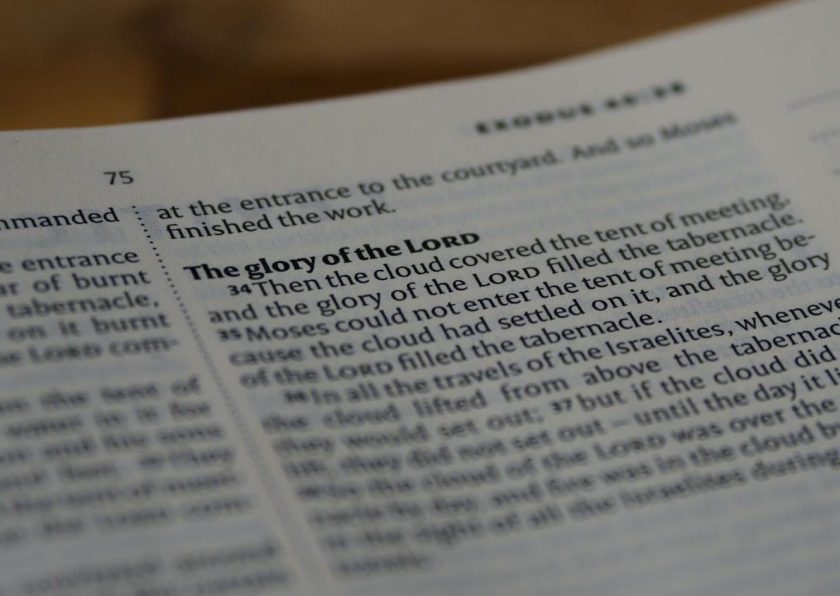
Perhaps because I am a Protestant, I have only found Marcionism to be a problem within the Protestant Church but it may also be so in other Christian traditions. I do not know and do not speak to those traditions. There are thankfully many Protestant and other pastors who have a very full and rich understanding of Scripture and teach it faithfully. I want to make that clear. I raise the issue of Marcionism because it can be a serious problem with resulting deep implications for sound faith so I wish to warn against it. The only remedy against Marcionism is to exegete the Bible carefully and within the confines of orthodox Christian doctrinal teaching. I believe that Scripture comes from God and so we need God’s help to understand it. We do well to guard ourselves against error by praying a scriptural prayer that I was given as a child. It was given to me in the King James Version by Scripture Union notes for children. I have prayed it in this version ever since and it remains, in my mind, a beautiful translation. So before every study of Scripture, I pray this prayer. I hope you find it as helpful as I have over my life:
Psalms 119:18 (KJV)
18 Open thou mine eyes,
that I may behold wondrous things out of thy law.
Thinking carefully about our beliefs as well as engaging in prayer and Bible study are all needed in order to retain and grow in our faith. Verses 11-13 of 2 Timothy 2 present an example of a Bible passage that could be misconstrued on a casual reading. A closer look, though, should tend towards a more accurate understanding of what Paul was communicating. This closer look applies across the board with Bible reading. It involves spending enough time reading any particular Bible passage to allow your own questions to surface. You might like to then pursue those questions with all the wonderful helps available either free online or through purchased materials, using commentators both ancient and modern. Marcionism is a heresy built upon the redaction of parts, or even most, of the Bible. We can continue this heresy by allowing presuppositions to dictate how we interpret Scripture and what Scripture we simply decide to chuck out thereby denying ourselves a more full-orbed understanding of what the Bible has been proclaiming across hundreds of years and coming from multiple witnesses. These witnesses include the prophets, apostles and the Lord Jesus Christ Himself, with His words and actions faithfully recorded by the gospel writers. Of course, the main aim here is to put up as our most needed consideration the notion of truth – both the possession of, and growth in, the truth and the handing of it on to others. Some things remain mysteries and we can come back to these at some later time. This is also a good reason for reading through the whole of Scripture, bit by bit each day. By the time we are finished, we can go back and start the whole process again. A second time through, things will become clearer. Then go for a third reading and so on. This should do us for the rest of our lives. A re-reading can make the whole thing look different. You won’t get bored if you keep intent on learning. This way, Marcionism will be crowded out from having any foothold whatsoever on our study of Scripture.
Therefore Pilate said to Him, “So You are a king?” Jesus answered, “You say correctly that I am a king. For this I have been born, and for this I have come into the world, to testify to the truth. Everyone who is of the truth hears My voice.” Pilate *said to Him, “What is truth?”
John 18:37-38 (NASB)
 Our World Our Faith